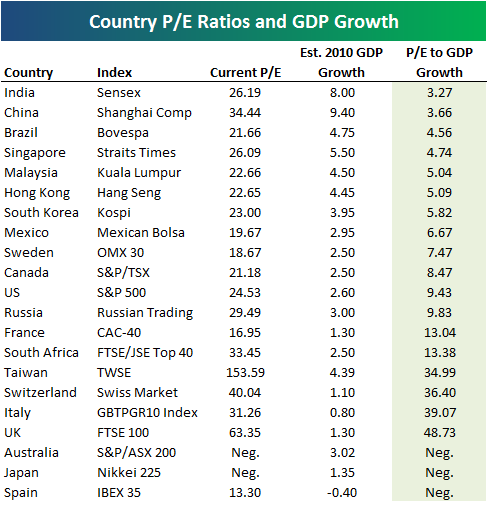
Sometimes its OK to just cut and paste, no additional commentary needed. Read along the lines and between the lines.
Malaysia Needs Fiscal Reforms: Fitch
KUALA LUMPUR, March 23 (Bernama) -- Malaysia needs to implement structural fiscal reforms like a goods and services tax in order to improve its credit rating, said Fitch Ratings.
Its Asia sovereign ratings director, Andrew Colquhoun, said structural reforms to raise government revenue as a percentage of gross domestic product (GDP) in a sustainable way and a broader structural economic reforms to increase the investment rate to give longer term growth prospects were needed.
The rating agency last June cut Malaysia's local currency ratings to "A" from "A+" due to concerns over the country's growing budget deficit which hit 7.4 per cent of GDP in 2008. He said the government planned to narrow the fiscal deficit to 5.6 per cent of GDP this year but has shied away from measures to reduce fuel subsidies and introduce new taxes.
"Disappointingly, fundamental reforms to budget revenues with the introduction of goods and services tax have been postponed.
"That kind of reform and structural improvements in the budget revenue are what we are looking for to restore positive pressure in the credit ratings," he told reporters after Fitch Ratings's 2010 credit briefing here on Tuesday. He said reforms had the potential to significantly improve the public finances on the structural side.
Meanwhile, Fitch Ratings' senior director of Financial Institutions Asia, Ambreesh Srivastava, said outlook for Asian banking systems was expected to be better this year.
"In 2009, sector return on asset (ROA) rose in Indonesia, the Philippines and Vietnam, and was stable in Singapore and Thailand.
"Malaysian banking sector's ROA was down due to one-off goodwill impairment at Maybank, excluding which ROA would have been relatively unchanged," he said.
On local banks, Ambreesh said, the rating outlook was mostly stable, but positive rating actions were possible for a few banks whose financial profiles had improved despite the recent downturn. He said under Basel 3 framework, banks were required to increase their tier-1 core capital ratio and this would result in moderation in return on equity (ROE).
"But capital position may need to be strengthened if the bar is raised significantly," he said.
The Basel 3 framework is scheduled for implementation by end-2012.
"If the bar is raised, I won't be surprised if there are some negative implications on ROE for the local banks," he said, adding that most local banks were at eight per cent and above.
Ambreesh said the banks, however, were likely to have adequate time to do so should this happen over the medium term.
-- BERNAMA
Najib Leaves For Hong Kong To Attend Asian Investment Conference
SEPANG, March 22 (Bernama) -- Prime Minister Datuk Seri Najib Tun Razak left to Hong Kong this afternoon to attend the Credit Suisse 13th Asian Investment Conference 2010 which starts Tuesday. Accompanied by his wife, Datin Seri Rosmah Mansor, Najib left on the government plane at 5.30 pm from Kompleks Bunga Raya at the KL International Airport. International Trade and Industry Minister Datuk Seri Mustapa Mohamed is also accompanying the prime minister on the trip. Najib is expected to deliver a speech at the four-day conference organised by global financial services group, Credit Suisse.
Najib, who is also Finance Minister, is expected to touch on Malaysia's liberalisation measures, provide hints on the make-up of the soon-to-be unveiled New Economic Model, increased efficiency via the Government Transformation Plan (GTP) and moves to make Malaysia a high-income economy.
The Prime Minister will also discuss with Sir John Major, former British Prime Minister and special adviser to Credit Suisse, steps taken to make Malaysia one of the favourite destinations for investors in Asia and outline the nation's plan for economic development. Najib's packed itinerary also includes meetings with Brady Dougan, Chief Executive Officer of Credit Suisse and Kai Nargolwala, Chairman of Credit Suisse Asia.
The Prime Minister will also be interviewed separately by Wall Street Journal's Peter Stein, Bloomberg TV's Susan Li, Business Week, Denise Tsang from the South China Morning Post and Duncan King, Credit Suisse AIC TV.
He will meet a group of Malaysian chief executive officers and hold one-on-one meetings with Credit Suisse fund managers. Najib and wife will return home on Wednesday.
-- BERNAMA
The leap we need to make — Tengku Razaleigh Hamzah
MARCH 23 — James Puthucheary lived what is by any measure an extraordinary and eventful life. He was, among other things, a scholar, anti-colonial activist, poet, political economist and lawyer.
The thread running through these roles was his struggle for progressive politics in a multiracial society. His actions were informed by an acute sense of history and by a commitment to a more equitable and just Malaysia.
James was concerned about economic development in a way that was Malaysian in the best sense. His thinking was motivated by a concerned for socioeconomic equity and for the banishment of communalism and ethnic chauvinism from our politics.
The launch of the Second Edition of this collection of James Puthucheary’s writings, “No Cowardly Past”, invites us to think and speak about our country with intellectual honesty and courage.
Let me put down some propositions, as plainly as I can, about where I think we stand.
1. Our political system has broken down in a way that cannot be salvaged by piecemeal reform.
2. Our public institutions are compromised by politics (most disturbingly by racial politics) and by money. This is to say they have become biased, inefficient and corrupt.
3. Our economy has stagnated. Our growth is based on the export of natural resources. Productivity remains low. We now lag our regional competitors in the quality of our people, when we were once leaders in the developing world.
4. Points 1) -3), regardless of official denials and mainstream media spin, is common knowledge. As a result, confidence is at an all time low. We are suffering debilitating levels of brain and capital drain.
Today I wanted to share some suggestions on how we might move the economy forward, but our economic stagnation is clearly not something we can tackle or even discuss in isolation from the problem of a broken political system and a compromised set of public institutions.
This country is enormously blessed with talent and natural resources. We are shielded from natural calamities and enjoy warm weather all year round. We are blessed to be located at the crossroads of India and China and the Indonesian archipelago.
We are blessed to have cultural kinship with China, India, the Middle East and Indonesia. We attained independence with an enviable institutional framework.
We were a federation with a Constitution that is the supreme law of the land, a parliamentary democracy, an independent judiciary, a common law system and an independent civil service. We had political parties with a strong base of support that produced talented political leadership.
We have no excuse for our present state of economic and social stagnation. It is because we have allowed that last set of features, our institutional and political framework, to be eroded, that all our advantages are not better realized.
So it makes little sense to talk glibly about selecting growth drivers, fine-tuning our industrial or trade policy, and so on, without acknowledging that our economy is in bad shape because our political system is in bad shape.
A case in point is the so called New Economic Model. The government promised the world it would be announced by the end of last year. It was put off to the end of this month. Now we are told we will be getting just the first part of it, and that we will be getting merely a proposal for the New Economic Model from the NEAC. Clearly, politics has intruded. The NEM has been opposed by groups that are concerned that the NEM might replace the NEP. The New Economic Model might not turn out to be so new after all.
The NEP
The irony in all this is that there is nothing to replace. The NEP is the opposite of New. It is defunct and is no longer an official government policy because it was replaced by the New Development Policy (another old New policy) in 1991. The “NEP” was brought back in its afterlife as a slogan by the leadership of UMNO Youth in 2004. It was and remains the most low-cost way to portray oneself as a Malay champion.
Thus, at a time when we are genuinely need of bold new economic measures, we are hamstrung by by the ghost of dead policies with the word New in them. What happens when good policy outlives its time and survives as a slogan?
The NEP was a twenty year programme. It has become, in the imaginations of some, the centre of a permanently racialized socio-economic framework.
Tun Ismail and Tun Razak, in the age of the fixed telephone (you even needed to go through an operator), thought twenty years would be enough. Its champions in the age of instant messaging talk about 100 or 450 years of Malay dependency.
It had a national agenda to eradicate poverty and address structural inequalities between the races for the sake of equity and unity. The Malays were unfairly concentrated in low income sectors such as agriculture. The aim was to remove colonial era silos of economic roles in our economy. It has been trivialized into a concern with obtaining equity and contracts by racial quotas. The NEP was to diversify the Malay economy beyond certain stereotyped occupations. It is now about feeding a class of party- linked people whose main economic function is to obtain and re-sell government contracts and concessions.
The NEP saw poverty as a national, Malaysian problem that engaged the interest and idealism of all Malaysians. People like James Puthucheary were at the forefront of articulating this concern. Its present-day proponents portray poverty as a communal problem.
The NEP was a unity policy. Nowhere in its terms was any race specified. It has been reinvented as an inalienable platform of a Malay Agenda that at one and the same time asserts Malay supremacy and perpetuates the myth of Malay dependency.
It was meant to unite our citizens by making economic arrangements fairer, and de-racializing our economy. In its implementation it became a project to enrich a selection of Malay capitalists. James Puthucheary had warned, back in 1959, that this was bound to fail. “The presence of Chinese capitalists has not noticeably helped solve the poverty of Chinese households.. Those who think that the economic position of the Malays can be improved by creating a few Malay capitalists, thus making a few Malays well-to-do, will have to think again. “
The NEP’s aim to restructure society and to ensure a more equitable distribution of economic growth was justified on principles of social justice, not claims of racial privilege. This is an important point. The NEP was acceptable to all Malaysians because its justification was universal rather than racial, ethical rather than opportunistic. It appealed to Malaysians’ sense of social justice and not to any notion of racial supremacy.
We were a policy with a 20 year horizon, in pursuit of a set of measurable outcomes. We were not devising a doctrine for a permanent socio-economic arrangement. We did not make the damaging assumption of the permanently dependent Malay.
Today we are in a foundational crisis both of our politics and of our economy. Politically and economically, we have come to the end of the road for an old way of managing things. It is said you can fool some of the people some of the time, but not all of the people all the time. Well these days the time you have in which to fool people is measured in minutes, not years.
The world is greatly changed. The next move we must make is not a step but a leap that changes the very ground we play on.
The NEP is over. I ask the government to have the courage to face up to this. The people already know. The real issue is not whether the NEP is to be continued or not, but whether we have the imagination and courage to come up with something which better addresses the real challenges of growth, equity and unity of our time.
At its working best the NEP secured national unity and provided a stable foundation for economic growth. Taken out of its policy context (a context that James helped frame) and turned into a political programme for the extension of special privilege, it has been distorted into something that its formulators, people such as the late Tun Razak and Tun Ismail, would have absolutely abhorred: it is now the primary justification and cover for corruption, crony capitalism and money politics, and it is corruption, cronyism and money politics that rob us and destroy our future.
No one who really cares about our country can approve of the role the NEP now plays in distorting the way we think about the economy, of our people, of our future, and retarded our ability to formulate forward-looking economic strategy.
The need for a wholistic approach to development based on the restoration and building of confidence.
We need a wholistic approach to development that takes account of the full potential of our society and of our people as individuals. We need an approach to development that begins with the nurturing and empowerment of the human spirit. Both personally and as a society, this means we look for the restoration of confidence in ourselves, who we are, what we are capable of, and the future before us.
I return to the question of the Middle Income Trap that I alluded to some time ago. I am glad that notion has since been taken up by the Government.
The middle income trap is a condition determined by the quality of our people and of the institutions that bind them. It is not something overcome simply by growing more oil palm or extracting more oil and gas. Our economic challenge is to improve the quality of our people and institutions. Making the break from the middle-income trap is in the first place a social, cultural, educational and institutional challenge. Let me just list what needs to be done. Before we can pursue meaningful economic strategy we need to get our house in order. We need to:
1. undertake bold reforms to restore the independence of the police, the anti-corruption commission and the judiciary. Confidence in the rule of law is a basic condition of economic growth.
2. reform the civil service
3. wage all out war on corruption
4. thoroughly revamp our education system
5. repeal the Printing Presses Act, the Universities and Colleges Act, the ISA and the OSA. These repressive laws only serve to create a climate of timidity and fear which is the opposite of the flourishing of talent and ideas that we say we want.
6. Replace the NEP with an equity and unity policy (a kind of “New Deal”) to bring everyone, regardless of race, gender, or what state they live in and who they voted for, into the economic mainstream.
These reforms are the necessary foundation for any particular economic strategies. Many of these reforms will take time. Educational reform is the work of many years. But that is no excuse not to start, confidence will return immediately if that start is bold. As for particular economic strategies, there are many we can pursue:
* We need to tap our advantage in having a high savings rate. Thanks to a lot of forced savings, our savings rate is about 38%. We need more productive uses for the massive funds held in EPF. LTH, LTAT and PNB than investment in an already over-capitalized stock market. One suggestion is to make strategic investments internationally in broad growth sectors such as minerals. Another is that we should use these funds to enable every Malaysian to own their own home. This would stimulate the construction sector with its large multiplier of activities and bring about a stakeholder society. A fine example of how this is done is Singapore’s use of savings in CPF to fund property purchases.
* The Government could make sure that the the land office and local government, developers and house-buyers are coordinated through a one-stop agency under the Ministry of Housing and and Local Government. This would get everyone active, right down to the level of local authorities. The keys to unleashing this activity are financing and a radical streamlining of local government approvals.
* We have been living off a drip of oil and cheap foreign labour. Dependence on these easy sources of revenue has dulled our competitiveness and prevented the growth of high income jobs. We need a moratorium on the hiring of low skilled foreign labour that is paired with a very aggressive effort to increase the productivity and wages of Malaysian labour. Higher wages would mean we could retain more of our skilled labour and other talent.
* Five years ago I called for a project to make Malaysia an oil and gas services and trading hub for East Asia. Oil and gas activities will bring jobs to some of our poorest states. We should not discriminate against those states on the basis of their political affiliations. No one is better placed by natural advantage to develop this hub. Meanwhile Singapore, with not a drop of oil, has moved ahead on this front.
* We should ready ourselves to tap the wealth of the emerging middle class of China, India and Indonesia in providing services such as tourism, medical care and education. That readiness can come in the form of streamlined procedures, language preparation, and targeted infrastructure development.
These are just some ideas for some of the many things we could do to ensure our prosperity. Others may have better ideas.
Conclusion
We are in a foundational crisis of our political system. People can no longer see what lies ahead of us, and all around us they see signs of decaying institutions. Wealth and talent will continue to leave the country in droves.
To reverse that exodus we need to restore confidence in the country. We do not get confidence back with piecemeal economic measures but with bold reforms to restore transparency, accountability and legitimacy to our institutions. Confidence will return if people see decisive leadership motivated by a sincere for the welfare of the country. The opposite occurs if they see decisions motivated by short term politics. Nevermind FDI, if Malaysians started investing in Malaysia, and stopped leaving, or started coming back, we would see a surge in growth.
In the same measure we also need to break the stranglehold of communal politics and racial policy if we want to be a place where an economy driven by ideas and skills can flourish. This must be done, and it must be done now. We have a small window of time left before we fall into a spiral of political, social and economic decline from which we will not emerge for decades.
This is the leap we need to make, but to make that leap we need a government capable of promoting radical reform. That is not going to happen without political change. We should not underestimate the ability of our citizens to transcend lies, distortions and myths and get behind the best interest of the country. In this they are far ahead of our present leadership, and our leadership should listen to them.
* Speech by Gua Musang MP Tengku Razaleigh Hamzah at the launch of the Second Edition of “No Cowardly Past: James Puthucheary, Writings, Poems, Commentaries” at the PJ Civic Centre on March 22, 2010.
* This is the personal opinion of the writer or publication. The Malaysian Insider does not endorse the view unless specified.